- – Mostly switched resources; few shared
- – Routers provide scalability
- – Groups of users determined by physical location
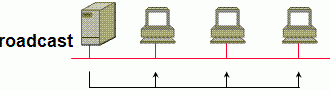
When we look at today’s LANs, the ones that are most commonly implemented today, we’re looking at mostly switched infrastructures, because of the price point of deploying switches, many companies are bypassing the shared hub technologies and moving directly to switches.Even within switched networks, at some point we still need to look to routers to provide scalability.
And also we see that in terms of the grouping of users, they’re largely determined by the physical location.So that’s a quick look at traditional shared LAN technologies. What we want to do now, since we know those limitations, we want to look at how we can fix some of those issues. We want to see how we can deploy LAN switches to take advantage of some new, improved technologies.